Current Issue
More...
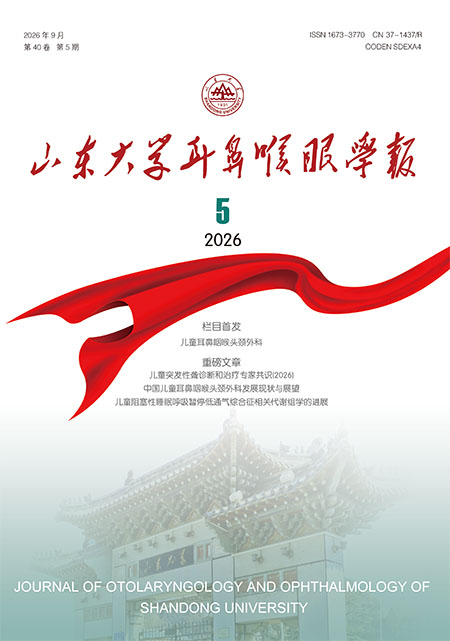
20 September 2026 Volume 40 Issue 5
  
Pediatric Otorhinolaryngology Head and Neck Surgery
Expert consensus on the diagnosis and treatment of sudden sensorineural hearing loss in children(2026)
Pediatric Group of the Otolaryngology-Head and Neck Surgery Branch of the Chinese Medical Doctor Association, Hearing and Speech Rehabilitation Professional Committee of Jiangsu Association of Rehabilitation Medicine, Audiology Branch of Zhejiang Medical Association
2026, 40(5):  1-10.  doi:10.6040/j.issn.1673-3770.0.2026.308
Abstract ( 193 )   PDF (636KB) ( 111 )   Save
References | Related Articles | Metrics
Objective The aim is to develop an expert consensus on the diagnosis and treatment of paediatric sudden sensorineural hearing loss(PSSNHL), and to provide evidence for standardised clinical practice. Methods This consensus was initiated by experts in paediatric otolaryngology, head and neck surgery, and related interdisciplinary fields in China. Nine clinical questions were selected through a systematic review of literature from Chinese and English databases, and nine recommendations were formulated through two rounds of the modified Delphi method. Results PSSNHL is defined as sensorineural hearing loss that occurs within 72 hours and involves a hearing threshold decrease of at least 20 dB HL in two or more adjacent frequencies in patients aged 18 years or under. A diagnosis requires a comprehensive, multidisciplinary assessment, including taking a patient's history, conducting a physical examination, and carrying out audiological, imaging, and genetic evaluations. Examination strategies are age-specific. Although routine classification-based treatment is not recommended, adult classification approaches may inform the diagnosis. The differential diagnosis should particularly exclude functional hearing loss, congenital middle ear malformations and inner ear anatomical abnormalities. The first-line treatment is corticosteroids(methylprednisolone or prednisolone at a dose of 1 mg/kg, up to a maximum of 60 mg/day for five days). Intratympanic or post-auricular dexamethasone injection may be considered as salvage therapy after initial treatment has failed. Adjuvant therapies include microcirculation-improving agents and neurotrophic drugs, and hyperbaric oxygen therapy may be used as an additional treatment. For patients with no hearing recovery after one month, hearing aids or cochlear implantation should be considered. Efficacy is evaluated according to the 2015 Chinese Guideline Grading Criteria. Prognosis is closely related to the time taken to commence treatment, the severity of hearing loss, bilateral involvement and the presence of accompanying vertigo. Conclusion This consensus provides clinical evidence for the standardised diagnosis and treatment of PSSNHL. This enables the condition to be detected and treated early, maximising the chance of preserving and recovering hearing in children.
Current status and prospect of pediatric otolaryngology-head and neck surgery in China
LI Qi, GU Qinglong
2026, 40(5):  11-17.  doi:10.6040/j.issn.1673-3770.0.2026.354
Abstract ( 65 )   PDF (511KB) ( 33 )   Save
References | Related Articles | Metrics
China's pediatric otolaryngology and head and neck surgery has experienced rapid development, achieving significant progress in standardized disease diagnosis and treatment, minimally invasive surgical techniques, artificial intelligence clinical applications, genetic intervention for inherited disorders, and multidisciplinary collaborative care. It has now established core development directions such as otology, rhinology, laryngology, head and neck surgery, pediatric sleep disorders, and clinical audiology. Children exhibit distinct growth and developmental characteristics compared with adults, with significantly different disease profiles that are also evolving due to environmental and lifestyle changes. The diagnostic and therapeutic approach in pediatric laryngology has fundamentally shifted—from empirical and symptomatic treatment to comprehensive assessment, with therapeutic methods transitioning to minimally invasive, precise, and personalized treatment plans, better safeguarding children's functional development and physical and mental health. However, the field still faces challenges, such as imbalanced medical resource allocation, clinical diagnostic deviations, difficulties in advancing cutting-edge technologies, and an incomplete postoperative rehabilitation system for children. Against the backdrop of advancing children's health initiatives in the new era, pediatric otolaryngology and head and neck surgery has adapted to the times, prioritizing children, function, and development as core principles. It continues to promote the clinical translation of advanced medical technologies, improving the full-service model from disease prevention and early screening to clinical diagnosis, postoperative rehabilitation, and long-term health follow-up. This effort aims to comprehensively protect children's ear, nose, throat, and head and neck physiological health, fostering their physical and mental development.
Advances in metabolomics for pediatric obstructive sleep apnea-hypopnea syndrome
JIANG Yue, GU Yajun, WANG Junguo, QIAN Xiaoyun
2026, 40(5):  18-24.  doi:10.6040/j.issn.1673-3770.0.2025.461
Abstract ( 55 )   PDF (809KB) ( 13 )   Save
References | Related Articles | Metrics
Objective sleep apnea-hypopnea syndrome(OSAHS)is a common disorder in children,characterized by recurrent upper airway obstruction and intermittent hypoxemia. Itcan lead to long-term adverse consequences including impaired neurocognitive function and cardiovascular development. Polysomnography(PSG)is currently the gold standard for diagnosis; however, it is operationally cumbersome and poorly tolerated by pediatric patients. Several studies have applied metabolomics to identify characteristic metabolic alterations in children with OSAHS, explore potential early-warning biomarkers, and analyze the metabolic profiles of associated complications,with the aim of better guiding clinical diagnosis and treatment. This review aims to summarize recent advances in metabolomics research related to pediatric OSAHS.
Clinical characteristics of middle ear cholesteatoma in children and analysis of individualized treatment effects under the guidance of EAONO/JOS staging
YANG Xiaolu, ZHOU Yongqing, LI Xiaoming, WANG Miao, LI Zhen
2026, 40(5):  25-36.  doi:10.6040/j.issn.1673-3770.0.2025.515
Abstract ( 65 )   PDF (4185KB) ( 19 )   Save
References | Related Articles | Metrics
Objective A retrospective cohort study was conducted at a single centre with the objective of analysing the clinical characteristics and surgical outcomes of paediatric cholesteatoma of the middle ear. The objective of this study was twofold: firstly, to validate the effectiveness of the European academy of otology and neurotology/Japanese otological society(EAONO/JOS)staging in guiding individualised surgical approaches, and secondly, to identify independent risk factors for postoperative recurrence. Methods A total of 171 paediatric patients(177 ears)with middle ear cholesteatoma under 14 years of age, admitted from January 1,2005 to December 31,2024, were included in the study. A retrospective analysis was conducted to extract core clinical features such as patients' clinical manifestations, imaging characteristics, surgical methods, and postoperative follow-up results. Chi-square tests were used for the purpose of classification, with indicators including characteristics of different types of cholesteatoma and surgical efficacy at different stages. Multivariate logistic regression analysis was employed to explore the significant factors influencing postoperative recurrence of paediatric middle ear cholesteatoma. Results The prevalence of cholesteatoma was found to be higher in males, with a peak incidence observed between the ages of 8 and 10 years. No significant difference was observed between the left and right ears. The predominant clinical manifestations were otorrhea(83.0%)and hearing loss(71.9%), with foul-smelling ear canal secretions(36.3%)serving as a significant distinguishing feature. Complications included subperiosteal abscess behind the ear. Perforation of the pars flaccida(51.4%)and diploetic mastoid(76.2%)were frequently observed. Cholesteatoma has a propensity to invade the epitympanum and antrum, followed by the posterior tympanum and mastoid process. The most prevalent ossicular chain injury pertains to concurrent involvement of the incus and incudostapedial joint. In 29.4% of cases, the tympanic segment of the facial nerve was exposed. According to the EAONO/JOS staging system, the majority(89.3%)of cases were classified as stage Ⅱ disease. Postoperative follow-up was conducted in 150 cases, with a range of 0.5-14 years, and recurrence was observed in 3 cases(2.0%). The pure-tone average and air-bone gap demonstrated significant postoperative improvement(all P<0.001). Multivariate analysis indicates that type Ⅳ ossicular chain injury is a significant predictor of postoperative recurrence. Conclusion Pediatric middle ear cholesteatoma is characterised by distinct clinical and pathological features. A surgical approach based on EAONO/JOS staging(atticotomy/antrotomy for stage Ⅰ, open radical mastoidectomy for stages Ⅱ-Ⅳ)has been shown to yield favourable outcomes. It is imperative that patients undergo regular postoperative follow-ups in order to monitor the contralateral ear, manage packing material retention, address membranous atresia, and facilitate early detection of recurrent cholesteatoma.
The current situation and frontiers of chronic sinusitis research in children: visual analysis based on CiteSpace
ZHU Bin, LIU Di, JIAO Cheng, YAN Qi, WANG Ying, GUAN Bing, MA Wei, XU Li, CAO Qing
2026, 40(5):  37-52.  doi:10.6040/j.issn.1673-3770.0.2025.383
Abstract ( 59 )   PDF (17720KB) ( 41 )   Save
References | Related Articles | Metrics
Objective The objective of this study is to employ the CiteSpace knowledge mapping tool ato systematically map the research landscape of paediatric chronic rhinosinusitis(CRS). A comprehensive analysis of the extant literature was conducted to ascertain the knowledge structure, research hotspots; and evolutionary trends. The analysis yielded data-driven, evidence-based references to optimise clinical diagnosis and treatment plans and guide future research directions. Methods A comprehensive search of the China National Knowledge Infrastructure(CNKI), Wanfang Data, VIP databases and Web of Science Core Collection databases was conducted up to 31 December 2024, to retrieve all all relevant literature. Following the screening process, the CiteSpace 6.4.R1 software was utilised to conduct co-occurrence, clustering, and burst analyses of authors, institutions, and keywords. This process yielded a series of knowledge graphs, which were utilised to explore research hotspots and developmental trends. Results The corpus comprised a total of 1,374 Chinese and 286 English artieles. As demonstrated in Chinese articles an initial increase was observed, which was subsequently followed by a plateau. While the total number of English publications is relatively low, it has maintained a stable trend overall. A significant finding of the present study was that collaboration networks among authors and institutions were considerably more dense in English articles than in Chinese articles. A review of the extant literature reveals that research in the field of Chinese medicine has been primarily focused on specific treatments, including endoscopic sinus surgery, medication and nasal irrigation. In addition, research has focused on the evaluation of efficacy, the identification of complications and the exploration of the mechanisms underpinning the treatment. By contrast, international research has placed a greater emphasis on endoscopic surgery, comprehensive disease management, comorbidities(e.g.cystic fibrosis and gastroesophageal reflux)and the exploration of underlying mechanisms. Conclusion Globally, research interest in paediatric CRS remains strong. The following research areas are currently receiving significant attention: treatment methods, efficacy evaluation, complication and comorbidity management, and disease mechanisms. Recent developments in the field have seen a shift inresearch priorities towards precision and minimally invasive treatment strategies, in-depth efficacy assessment, and multi-omics studiesof pathogenesis.
Effects of tonsillectomy and adenoidectomy on vocal characteristics and resonance parameters in children
CHEN Qiaoting, ZOU Song, ZHU Jinzhi, ZHANG Jinxing, LI Jianxiang
2026, 40(5):  53-56.  doi:10.6040/j.issn.1673-3770.0.2025.050
Abstract ( 49 )   PDF (397KB) ( 28 )   Save
References | Related Articles | Metrics
Objective To explore the effects of tonsillectomy and adenoidectomy on vocal characteristics and resonance parameters in children. Methods A total of 61 children undergoing tonsillectomy and adenoidectomy, and 61 healthy children who underwent physical examination in the hospital were enrolled as experimental group and healthy control group, respectively. The multi-dimensional vocal examination was performed for all children to compare multi-dimensional vocal parameters [fundamental frequency(F0), Jitter, Shimmer, amplitude variation coefficient(vAm), noise harmonic ratio(NHR), voice turmoil index(VTI), soft production index(SPI), formant frequencies(F1-F3), bandwidths(B1-B3)] between the two groups before and after surgery. Results Before surgery, vAm in experimental group was higher than that in healthy control group(P<0.001), but there was no significant difference in F0, Jitter, Shimmer, NHR, VTI or SPI between the two groups(P>0.05). Compared with 1d before surgery, vAm was decreased at 15d after surgery, vAm and NHR were decreased at 30d after surgery(all P<0.001), formant frequencies and bandwidths were decreased at 30d after surgery(all P<0.001). Conclusion Adenoidectomy and tonsillectomy can reduce vAm, NHR, formant frequencies and bandwidths in children.
Influencing factors and clinical predictive value for disease severity in pediatric obstructive sleep apnea-hypopnea syndrome
ZHAO Huiming, LIU Bin, CHEN Kun, LI Yafei, CHEN Zi
2026, 40(5):  57-64.  doi:10.6040/j.issn.1673-3770.0.2025.391
Abstract ( 59 )   PDF (1026KB) ( 16 )   Save
References | Related Articles | Metrics
Objective To analyze the influencing factors for disease severity in pediatric obstructive sleep apnea-hypopnea syndrome(OSAHS)and assess their clinical predictive value. Methods A total of 182 children with OSAHS treated at Shijiazhuang People's Hospital from January 2023 to December 2024 were enrolled. Demographic information, polysomnography data, and complete blood count results were collected, and systemic inflammatory indicators were calculated. Differences between groups, Spearman rank correlation, random forest model, and logistic regression analysis were used to identify factors influencing disease severity in children with OSAHS, and a prediction model was constructed based on these factors. The predictive performance was evaluated using the receiver operating characteristic(ROC)curve. Results Statistically significant differences were observed in body mass index(BMI), history of premature birth, and systemic inflammatory indicators between children with mild OSAHS and those with moderate to severe OSAHS(P<0.05). Spearman rank correlation and random forest model analysis revealed that the neutrophil-to-lymphocyte ratio(NLR)was the most influential variable among the six systemic inflammatory indicators affecting disease severity. Logistic regression analysis showed that higher BMI(OR=1.383, 95%CI: 1.201-1.592)and higher NLR(OR=1.575, 95%CI: 1.262-1.965)were associated with an increased risk of moderate to severe OSAHS(P<0.05). ROC curve analysis demonstrated that the constructed prediction model achieved an area under the curve of 0.800(95%CI: 0.734-0.856)for predicting disease severity. Conclusion BMI and NLR are influencing factors for disease severity in children with OSAHS. The prediction model based on these two factors demonstrates good predictive performance, which may facilitate early assessment of disease severity and guide clinical management.
Efficacy of graphene-based heated nasal mask combined with mometasone furoate nasal spray and montelukast in the treatment of pediatric obstructive sleepapnea-hypopnea syndrome
LIU Bin, ZHAO Huiming, CHEN Kun, LI Yafei, CHEN Zi, LONG Liangzhen
2026, 40(5):  65-72.  doi:10.6040/j.issn.1673-3770.0.2025.024
Abstract ( 35 )   PDF (500KB) ( 16 )   Save
References | Related Articles | Metrics
Objective To investigate the clinical value of graphene-based heated nasal masks combined with mometasone furoate nasalspray and montelukast sodium in the treatment of pediatric obstructive sleep apnea-hypopnea syndrome(OSAHS). Methods A total of 100 pediatric patients with OSAHS due to isolated adenoid hypertrophy were enrolled and randomly assigned to a control group(n=50)and an observation group(n=50). The control group received treatment with mometasone furoate nasal spray and montelukast sodium. The observation group received the same treatment regimen supplemented with graphene-based heated nasal masks. Treatment outcomes, sleep-disordered breathing parameters, serum inflammatory cytokine levels, and sleep-related quality of life indicators were observed and compared between the two groups. Results The overall response rate was higher in the observation group than in the control group, with a statistically significant difference as determined by a T-test(P=0.021). Compared with the control group, patients in the observation group exhibited lower obstructive apnea index(OAI), apnea-hypopnea index(AHI), and oxygen desaturation index(ODI)scores post-treatment, but higher lowest arterial oxygen saturation(LSaO2)levels(P<0.05). Serum Interleukin-6(IL-6), C-reactive protein(CRP), and tumor necrosis factor-alpha(TNF-α)levels showed statistically significant differences(P<0.05). Scores of Pittsburgh sleep quality index(PSQI)and total scores of obstructive sleep apnea-18 survey(OSA-18)were significantly lower(P<0.05), while actual sleep duration was longer(P<0.05). Stratified analysis by obesity level indicated that, following the stratification based on obesity status, there were notable changes in indicators of sleep-disordered breathing, improvements in sleep quality, and reductions in serum inflammatory factor levels before and after treatment. were smaller in obese patients than in those with normal weight. Conclusion The combination of graphene-based heated nasal masks with mometasone furoate nasal spray and montelukast sodium for treating patients with simple adenoid hypertrophy complicated by OSAHS can reduce clinical symptoms and enhance the therapeutic efficacy. However,this approach shows no significant effect in obese pediatric patients with OSAHS.It is recommended to incorporate dietary guidance and weight management into the treatment regimen.
A case of secondary bilateral vocal cord paralysis treated by external fixation of vocal cord in a newbornand literature review
LI Qingliang, DOU Fenfen, LI Wuxuan, WANG Xiaojie, KANG Lili, SUN Xiaowei
2026, 40(5):  73-77.  doi:10.6040/j.issn.1673-3770.0.2025.290
Abstract ( 45 )   PDF (2668KB) ( 21 )   Save
References | Related Articles | Metrics
Objective To investigate the efficacy of bilateral vocal cord external fixation under suspension laryngoscopy for paediatric patients with bilateral vocal cord paralysis following tracheoesophageal fistula repair. Methods A paediatric patient developed bilateral vocal cord paralysis with severe respiratory distress following tracheoesophageal fistula repair, highly suggestive of iatrogenic injury. After two weeks of conservative observation under tracheal intubation with no significant improvement, Under general anaesthesia, bilateral vocal cord external fixation was performed via laryngoscopy. Postoperatively, antibiotics were administered for infection prophylaxis, corticosteroids and nebulisation to reduce laryngeal oedema, and anti-reflux medication to inhibit oesophageal reflux. Tracheal intubation and ventilator support were maintained. Results The infant was successfully extubated on the fifth postoperative day with restored normal respiration and was discharged. An eight-month follow-up revealed near-complete recovery of bilateral vocal cord mobility, and sutures were removed. Conclusion Bilateral vocal cord paralysis in neonates may present with severe respiratory distress. The laryngeal microlaryngoscope-assisted vocal cord fixation technique represents a safe, effective, and minimally invasive surgical approach for managing this condition.
Combined endoscopic and microscopic treatment of a middle ear teratoma in an infant:a case report and literature review
ZHAO Xinghe, JIA Guangbiao, YIN Depei, ZHU Baolian, DOU Xunwu, LI Qiang
2026, 40(5):  78-83.  doi:10.6040/j.issn.1673-3770.0.2025.340
Abstract ( 48 )   PDF (6669KB) ( 19 )   Save
References | Related Articles | Metrics
Objective The aim is to explore the clinical characteristics, imaging manifestations, and surgical strategies of endoscopic combined microscopic surgery for middle ear teratoma in infants. Methods The main clinical manifestation in this paediatric patient was recurrent discharge from the ear canal. Preoperative temporal bone computed tomography(CT)revealed a soft tissue mass with bone destruction in the left external auditory canal and middle ear. The lesion extended through the Eustachian tube to the nasopharynx. Magnetic resonance imaging(MRI)showed a T1-weighted image(T1WI)iso-signal and T2-weighted image(T2WI)high signal mass with local diffusion restriction. Under general anesthesia, endoscopic and microscopic surgery were performed. A posterior auricular approach mastoid exploration was used in combination with a nasopharyngeal approach to completely remove the tumour and perform artificial ossicular chain reconstruction. During the operation, a new growth was found in the tympanic cavity, with visible hair on the surface and encapsulating the ossicular chain. Results The postoperative pathology report diagnosed the tumour as a mature teratoma. Follow-up showed that the tympanic membrane had recovered well, withno complications such as facial nerve palsy. However, hearing did not show significant improvement during the postoperative follow-up and further observation was required. A total of 16 reports(23 cases)were included in the literature review. Combined with this case, the analysis showed that: The median age at onset was 12 months(range 2 weeks-12 years), and the onset was more common in females(87.5%, 21/24); The left side was affected in 87.5%(21/24)of cases. The clinical manifestations were mainly ear discharge(87.5%), hearing loss(70.8%), and ear pain(37.5%). Some children presented with facial paralysis, postauricular redness and swelling, and nasal pharyngeal obstruction. The imaging features were as follows: CT showed slightly high-density foci in the external auditory canal, tympanic cavity, and eustachian tube accompanied by the surrounding ossicular chain. MRI mostly showed T1 iso-signal and T2 high signal. The pathological type was mainly mature teratoma.The treatment mostly adopted the microsurgical approach with tumour resection through the posterior auricular incision. In some cases,endoscopic techniques were used to remove the tumour through the eustachian tube approach. After the operation, 2 cases had recurrence and underwent reoperation, the rest had good prognosis. Conclusion Infantile middle ear teratoma exhibits characteristic clinical manifestations and imaging features. A combination of endoscopic and microscopic surgery provides good exposure of the surgical field and enables complete tumour resection. The timing of surgery for the ossicular chain still needs to be carefully considered, and the decision on ossicular chain reconstruction should be based on long-term follow-up observations.
Original Article
Sensitivity analysis of effects of meteorological factors on sudden sensorineural hearing loss in patients according to sex
LANG Yongyao, YANG Yun, ZHOU Wencheng
2026, 40(5):  84-88.  doi:10.6040/j.issn.1673-3770.0.2023.284
Abstract ( 43 )   PDF (396KB) ( 21 )   Save
References | Related Articles | Metrics
Objective Our aim was to explore the meteorological differences in the incidence of sudden deafness(SD)in patients according to sex. Methods Patients with SD who were hospitalized and treated in the Otolaryngology Department of the Shengze Branch of Jiangsu Provincial People's Hospital were included in this study. We matched the meteorological data from the day of SD onset with each patient, and we compared the differences in the meteorological environment of the patients according to sex on the day of SD onset. Results The age range of patients with SD was relatively large, with frequent SD occurrence in the middle-aged and elderly. The ages of the male and female patients were not significantly different; we found differences in the seasonal distribution of onset according to sex, with more cases found for men in summer and autumn, and more cases found for women in winter and spring. No significant differences were identified between men and women for indicators such as weather category, wind scale, or air quality index on the day of SD onset, but a significant difference was found for temperature. The daily minimum, maximum, and mean temperature and temperature range for the male patients on the day of SD onset were higher than those for the female patients. Conclusion Meteorological factors differed on the day of SD onset between the sexes. Male patients were more likely to develop SD in environments with higher temperatures and a larger daily temperature range, whereas female patients were more likely to develop SD in environments with lower temperature and a narrower daily temperature range.
The application of 70° endoscope in the resection of inverted papilloma of the maxillary sinus via the prelacrimal recess approach
ZHAO Ziqi, LYU Cao, GONG Manxu, LAN Zhong, MA Yan, ZHU Qiufen, YANG Xiaohong, BAI Zhong
2026, 40(5):  89-93.  doi:10.6040/j.issn.1673-3770.0.2025.477
Abstract ( 46 )   PDF (3794KB) ( 22 )   Save
References | Related Articles | Metrics
Objective To investigate the efficacy of a 70° endoscope in the resection of maxillary sinus inverted papillomas via the prelacrimal recess approach(PLRA). Methods This retrospective analysis reviewed the clinical data of 15 cases of endoscopic resection of maxillary sinus inverted papillomas via the PLRA. All patients underwent preoperative endoscopic, CT, and contrast-enhanced MRI examinations to determine the extent of the lesions. According to the Tongren staging system, 3 cases were classified as Stage 2 and 12 as Stage 3. Under a 0° endoscope, the maxillary sinus ostium was routinely enlarged and opened; under a 70° endoscope, tumors were observed on the inferior, anterior, and posterolateral wall of the maxillary sinus, and complete resection was not possible. A prelacrimal fossa incision was made, and a 70° endoscope was used to visualize the walls of the maxillary sinus, followed by complete surgical resection of the tumor. Postoperative follow-up was conducted regularly to monitor for tumor recurrence and assess improvement in clinical symptoms. Results All 15 patients underwent the procedure. They were followed up for 3 to 36 months, with a mean follow-up of 12 months. None of the 15 patients experienced tumor recurrence postoperatively; nasal obstruction improved, and no clinical symptoms such as epistaxis, headache, diplopia, or epiphora occurred. There were no reports of facial pain and abnormal numbness. Conclusion The PLRA is the preferred method for resecting inverted papillomas whose base is located on the anterior, inferior, or anterior segment of the medial wall of the maxillary sinus. The use of a 70° endoscope allows for visualization of all walls of the maxillary sinus, providing a wide field of view that facilitates complete tumor resection, reduces the risk of recurrence, and improves clinical symptoms.
Evaluation of postoperative efficacy and analysis of prognostic factors in chronic sinusitis patients undergoing functional endoscopic sinus surgery in the "internet+"medical model
WU Bo, YAN Bin, TANG Yong
2026, 40(5):  94-102.  doi:10.6040/j.issn.1673-3770.0.2025.446
Abstract ( 49 )   PDF (544KB) ( 22 )   Save
References | Related Articles | Metrics
Objective To investigate preoperative and postoperative clinical parameters in patients with chronic sinusitis, evaluate surgical outcomes, analyze potential prognostic factors, and provide a reference for precise clinical management to improve patient prognosis. Methods We conducted a retrospective analysis of clinical data from 100 patients who underwent surgery for chronic sinusitis. A standardized comprehensive treatment protocol for chronic sinusitis was implemented, utilizing an ‘Internet Plus’ healthcare model that integrated remote, in person, and interactive medical services. Short-term efficacy was evaluated through follow-up assessments 12 weeks after treatment, and all patients were followed for 18 months to analyze factors that may influence the prognosis of chronic sinusitis. Results The effect sizes for all scales after treatment were >0.50, and the differences were all statistically significant(P<0.05). Gender(P=0.674), age(P=0.527), affected side(P=0.369), duration of illness(P=0.430), concomitant hypertension(P=0.094), concomitant coronary heart disease or myocardial infarction(P=0.144), peripheral blood neutrophil-to-lymphocyte ratio(NLR)(P=0.514), and platelet-to-lymphocyte ratio(PLR)(P=0.635)did not show a significant association with the prognosis of chronic sinusitis between groups, and the differences were not statistically significant; however, diabetes(HR=2.879, P=0.037), concomitant allergic rhinitis(OR=4.240, P=0.013), the presence of nasal polyps(HR=0.203, P=0.042), and the percentage of eosinophils in peripheral blood(OR=0.243, P=0.046)were independent risk factors for poor prognosis. Additionally, the preoperative Lund-Mackay score(OR=1.166, P=0.016), the preoperative SNOT-22 score(OR=1.340, P<0.001), preoperative VAS score(OR=2.046, P<0.001), and the preoperative Lund-Kennedy score(OR=1.441, P=0.008). The differences in the prognosis of chronic sinusitis among the groups were all statistically significant. The linear mixed-effects model showed that SNOT-22 scores, VAS scores, and Lund-Kennedy scores all decreased significantly at all post-treatment time points(all P<0.05). Conclusion The prognosis of chronic sinusitis is not associated with gender, age, affected side, duration of the disease, concomitant hypertension, coronary heart disease, or hematological indices such as NLR and PLR. It is significantly influenced by diabetes mellitus, concomitant allergic rhinitis, the presence of nasal polyps, and the percentage of eosinophils in peripheral blood. Preoperative Lund-Mackay, SNOT-22, VAS, and Lund-Kennedy scores serve as positive prognostic factors. Patients with diabetes, allergic rhinitis, or nasal polyps tend to have a less favorable prognosis. Therefore, clinical management should emphasize stringent glycemic control and timely administration of combined anti-allergic and anti-inflammatory therapy to mitigate the risk of a poor outcome.

A risk prediction model for extubation failure after tracheotomy was constructed based on the decision tree method
WEI Qianqian, WU Juan
2026, 40(5):  103-108.  doi:10.6040/j.issn.1673-3770.0.2025.219
Abstract ( 39 )   PDF (2856KB) ( 11 )   Save
References | Related Articles | Metrics
Objective To identify the risk factors for extubation failure in patients after tracheotomy and to construct a risk prediction model based on a decision tree algorithm. Methods A total of 215 patients with tracheotomy who were hospitalized in the First Affiliated Hospital of Nanjing Medical University from February 2022 to April 2024 were retrospectively selected as the research subjects. They were divided into the successful extubation group(176 cases)and the failed extubation group(39 cases)according to whether the tracheotomy cannulas were successfully removed after the operation. Logistic regression was used to analyze and screen the related factors of postoperative extubation failure in patients with tracheotomy, and the decision tree model was constructed using R language software. Results The extubation failure rate was 18.14%; Logistic regression analysis showed that age ≥60 years, Glasgow Coma Scale(GCS)score ≤8, cough effectiveness grade 0~2, absent swallowing reflex, swallowing dysfunction, and abnormal hemoglobin levels were all independent risk factors for extubation failure after tracheotomy(P<0.05); Decision tree modeling identified swallowing reflex as the most influential factor for extubation failure in tracheotomy patients, with an information gain of 0.32; Both the logistic regression model and the decision tree model demonstrated good predictive performance for postoperative extubation failure risk, with areas under the receiver operating characteristic(ROC)curve of 0.848 and 0.823, respectively. Conclusion The construction of a risk prediction model, based on decision trees, has proven effective in the prediction ofextubation failure subsequent to tracheotomy.
Screening of key active metabolites and exploration of potential mechanisms of gut microbiota in thyroid cancer throughnetwork pharmacology and ADMET prediction study
CHEN Ziqing, HUANG Guanjing, LU Biaoqing
2026, 40(5):  109-122.  doi:10.6040/j.issn.1673-3770.0.2025.452
Abstract ( 60 )   PDF (17502KB) ( 18 )   Save
References | Related Articles | Metrics
Objective To explore the key bioactive metabolites and potential mechanisms by which the gut microbiota and its metabolites influence thyroid cancer(TC)through the integration of network pharmacology and computational analysis methods. Methods Screen for core target genes associated with thyroid cancer and integrated them with key gut microbiota and their associated metabolites/bioactive compounds. Use Cytoscape software to construct a"microbiota-metabolite-core target" network to visualize regulatory relationships.The drug-like properties of key molecules in the network were evaluated using the Lipinski rules via the SwissADME server. Subsequently, the admetSAR 2.0 platform was used to conduct a comprehensive prediction of their pharmacokinetic ADMET(absorption, distribution, metabolism, excretion, and toxicity)properties, including pharmacokinetics and safety risks assessments. Results As a result, a total of 60 microbial metabolites were identified as common targets for thyroid cancer. Among them, key Microbial species such as Bifidobacterium and Lactobacillus act on key genes in thyroid cancer:such as,(tumor protein p53 TP53),(RAC-alpha serine/threonine-protein kinase 1 AKT1)and(tumor necrosis factor, TNF ). through key metabolites including apigenin and 3-indolepropionic acid. Functional enrichment analysis indicates that the core targets primarily involve thephosphatidylinositol 3-kinase/protein kinase B(PI3K/AKT)and mitogen-activated protein kinase(MAPK), and apigenin binds to AKT1 with an energy of -8.59 kcal/mol, exhibiting affinity comparable to that of the positive control, capivasertib(-9.51 kcal/mol). ADMET prediction indicated that lead compound complies with Lipinski's five rules, demonstrating good bioavailability and a low carcinogenic risk. Conclusion Based on bioinformatics analysis, this study provides preliminary insights into the potential mechanisms by which the gut microbiota influences thyroid cancer. The gut microbiota may regulate thyroid cancer cell proliferation and the inflammatory microenvironment through multiple targets and pathways via active metabolites such as apigenin and 3-indolepropionic acid. These natural compounds exhibit good drug-like properties and hold promise as potential lead molecules for the prevention and treatment of thyroid cancer.
Comparison of manual and femtosecond laser arcuate keratotomy for correction of corneal astigmatism in patients undergoing cataract surgery
HE Yuping, HU Zunxia, GUAN Fanyu, GUO Qiongtian, LYU Hang, DUAN Tiantian, SIMA Jing, CAO Jiaguo
2026, 40(5):  123-132.  doi:10.6040/j.issn.1673-3770.0.2025.293
Abstract ( 64 )   PDF (8146KB) ( 30 )   Save
References | Related Articles | Metrics
Objective To compare the effectiveness of penetrating femtosecond laser-assisted arcuate keratotomy(FSAK)and manual arcuate keratotomy(mAK)in correcting mild-to-moderate regular corneal astigmatism in cataract patients. Methods This non-randomised cohort study involving 54 eyes, including 22 eyes that underwent mAK using a corneal depth marker knife and 32 eyes that received penetrating FSAK. Both groups underwent combined phacoemulsification and implantation of non-toric intraocular lenses. The primary outcomes included postoperative visual acuity and changes in corneal astigmatism at three months. Alpins vector analysis was used to compare target-induced astigmatism(TIA), surgically induced astigmatism(SIA), difference vector(DV), and correction index(CI)between the two groups. An independent-samples t-test was employed to compare the effects of astigmatism correction. Results Astigmatism in the mAK group decreased from(1.26±0.27)D to(0.90±0.59)D, while the FSAK group decreased from(1.24±0.27)D to(0.70±0.37)D, with no statistically significant difference between the two groups(P=0.133). Alpins analysis revealed that the SIA, DV, and CI of the mAK group were all higher than the FSAK group(P=0.238、P=0.133、P=0.191). Both groups showed a tendency toward undercorrection. Although intergroup differences were not statistically significant, the larger standard deviations oberved in the mAK group indicate diminished controllability and predictability. One case of corneal perforationwas observed in the mAK group. Conclusion Both FSAK and mAK can successfully correct mild-to-moderate regular astigmatism in cataract patients. However, FSAK exhibits superior safety and surgical predictability, albeit at a higher cost.

Founded in 1987, Bimonthly
ISSN 1673-3770
CN 37-1437/R

AdvertisementMore...

   Links